Week 1: Starting my internship
Read the About page for context regarding this blog.
First day, sort of
My contract was supposed to start on the 15th of January. That morning, I dutifully packed my laptop and headed to the 6th floor of the Engineering Building.
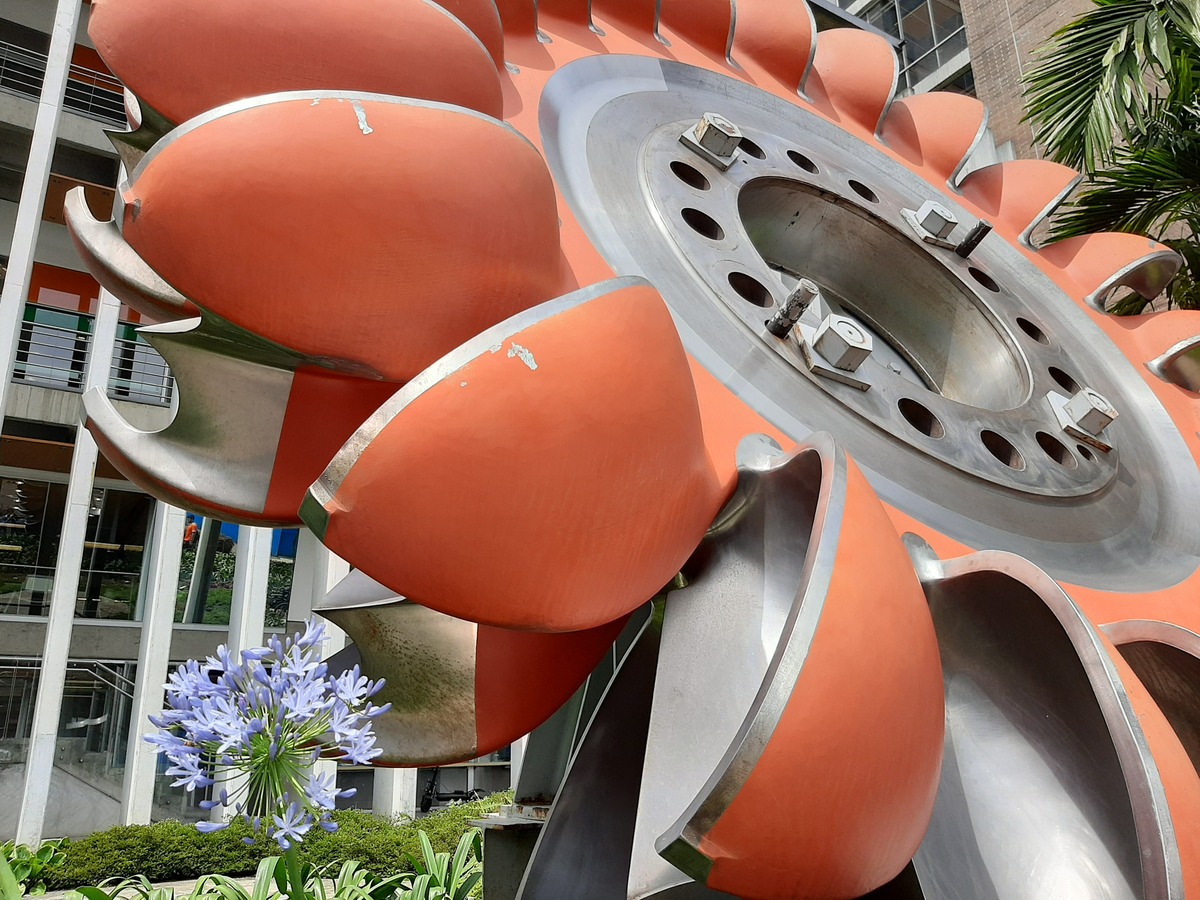
The Beauty and the Beast. An old picture back from November 2022. The closest I have to a picture of the Engineering Building. There’s also this guy’s photo, but it’s all rights reserved.
As I waited for my boss to arrive, I caught some sun and tried to fill in the NYT crosswords.
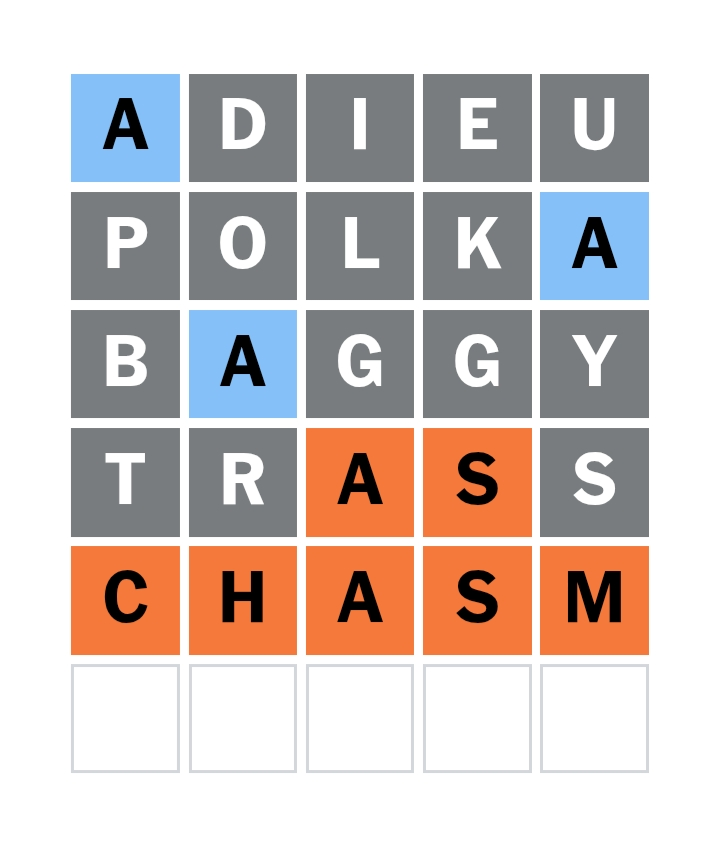
Wordle word was ‘chasm’ on 2026-01-15.
Office tour
An hour later or so, professor Guarín arrived and showed me around my work space. He introduced me to advisee graduate students OARC and AYMV1. They’re doing research on pellet mechanics and seismic inversion, respectively. I was shown around the coworking space (5th floor, same building), got a locker key, and sat down to read.
Research 101
Professor Guarín asked me whether I had any former research experience (I don’t), and promptly gave me an introduction to the concept: trying stuff out and seeing if it works. We’re starting with a literature review, i.e., playing catch up by reading what’s already been done (e.g. the Riascos-Goyes paper or his Bachelor’s Thesis).
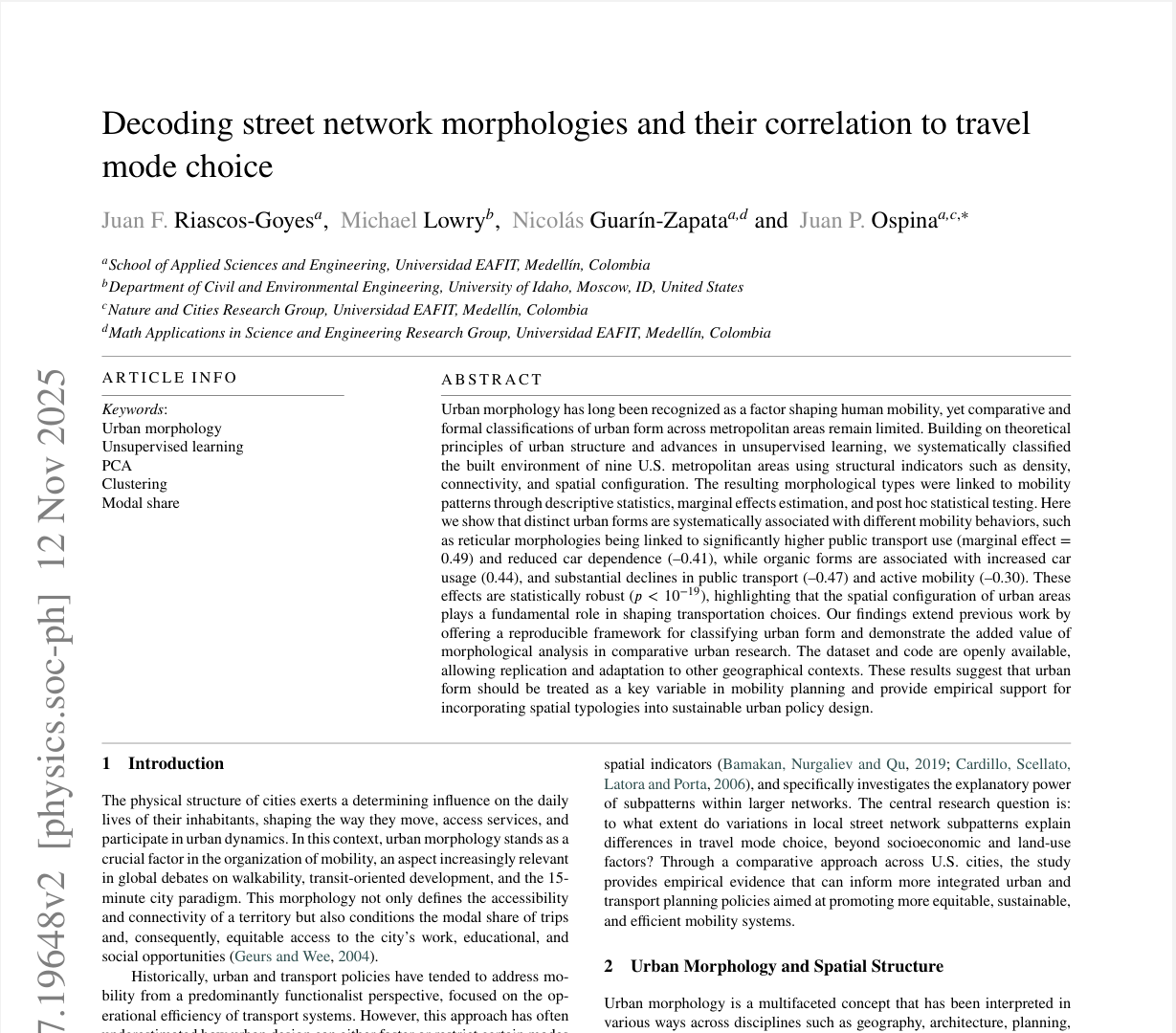
Riascos-Goyes’ paper (preview).
He also strongly suggested I first read Keshav’s How to Read a Paper, which I already knew of thanks to professor Juan Carlos Montoya Mendoza.
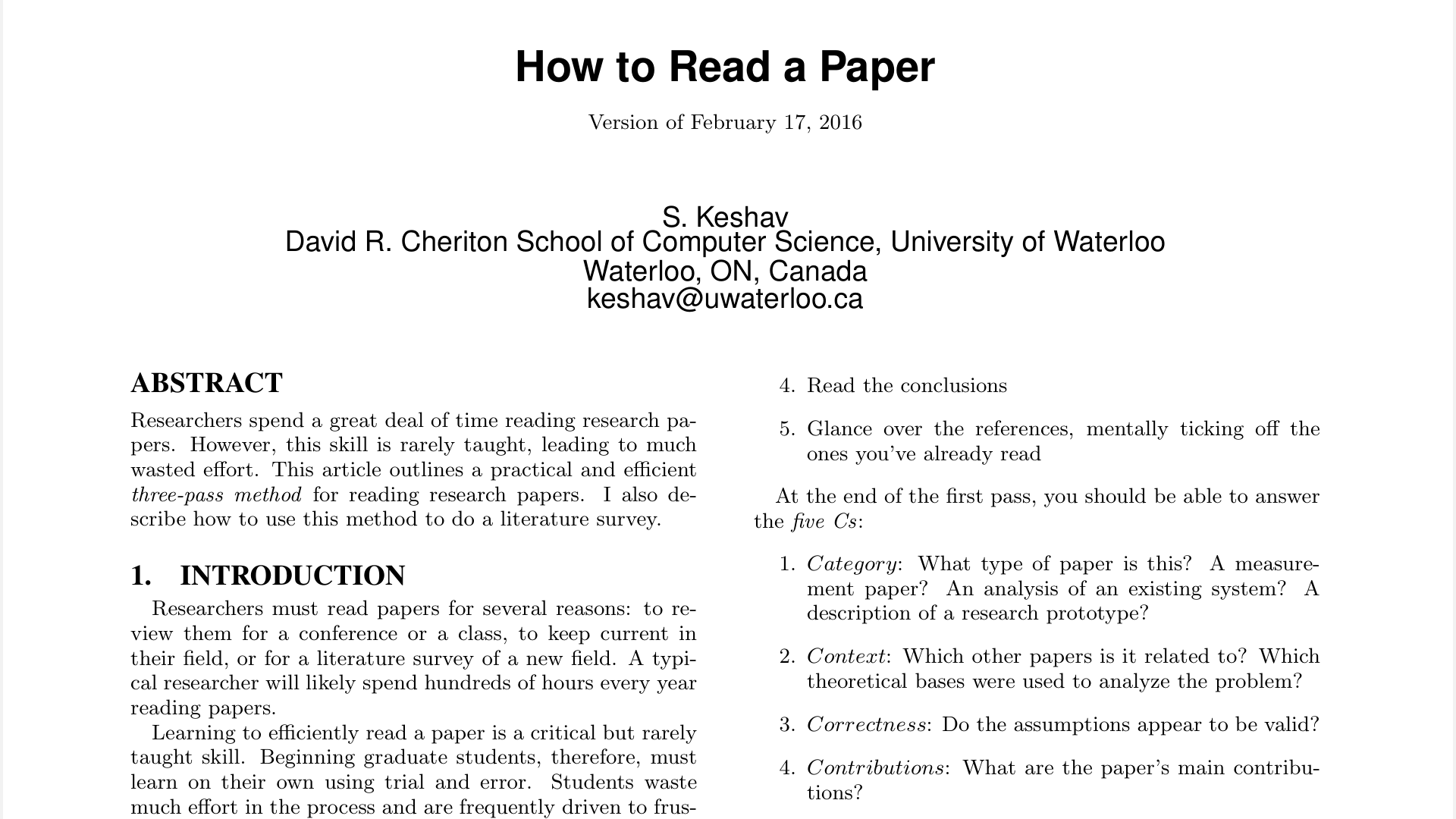
Keshav paper on how to read papers (preview).
Early leave
I had lunch with OARC, AYMV, and two other fellows whose names I’ve since forgotten (although one of them was an ‘Ex’). I left early that day, as the project hadn’t even started yet.
Initial meeting
The next day, I got to attend the project’s initial meeting. I met several research associates (’co-researchers’?) as well as master’s and doctoral students.
In all, we spent an hour introducing ourselves around the table, discussing the meaning of terms such as urban form or computational modelling.
First actual week
More reading: the project proposal, R-G’s Bachelor’s Thesis (mentioned earlier), skimming Batty’s 2017 book (quite dense). On Thursday, I got access to the Zotero group library. Two other papers on generative grammars were there, but I didn’t read them in their entirety.
Meeting new people
- JDAC, a doctoral student in Mathematics Engineering;
- JAGE, a master’s student in Urban and Environmental Processes;
- EMB and GPB, master’s students in Applied Mathematics.
Then there’s AYMV, C, and MABB, but I’m still in the dark as to what they research.
Guitar
EMB suggested I enrol in one of those Art Workshops offered by the University. So far, I’m inclined to pick either Digital Photography or Guitar. I have owned a Yamaha PSR E-423 keyboard since I was around 6, but never learnt to play it properly. Perhaps it would be wise to learn the foundations of music through this mini guitar-course before moving on to the piano?
Closing remarks
This whole research affair vaguely resembles some of the projects I have been handed out during my time as a student. Unlike those projects, research stands out in that you are attempting to do a new thing. There’s no measuring stick to tell you how you are doing.
In other words, I can’t simply count on a rubric to know whether I fulfilled the evaluation specs or not. That bothers me to some extent.
I’m still warming up to this new reality where one has more freedom and, conversely, more responsibility.
Extra notes
I took some notes on what I did during my first day (2026-01-19):
10:40 Reading about how journal quartile rankings are calculated.
10:40 The Handbook Of Urban Morphology | Wiley Online Books
10:41 How to (seriously) read a scientific paper | Science | AAAS
11-ish I downloaded a book: Batty, Michael. The New Science of Cities. First paperback edition, The MIT Press, 2017. It was mentioned in the project proposal, so I thought it made sense to read it. I’m going to be working with L-systems, agent simulations, and some unsupervised learning? (If I’m not mistaken)
11:30-13:00 Lunch with prof Pablo Castro
13:20 OARC told me to use the laptop stand that prof Nicolás had let lying around the coworking space. AYMV told me to do two passes when reading the paper; third pass is for the rare occasion one needs to recreate a paper, say.
13:33
Crabgrass Frontier: The Suburbanization of the United States[1] is a book written by historian Kenneth T. Jackson and published in 1985. Extensively researched and referenced, the book takes into account factors that promoted the suburbanization of the United States, such as the availability of cheap land, construction methods, and transportation, as well as federal subsidies for highways and suburban housing.
13:42 Concept of deserts: geographical region with limited access to e.g. banking, food, medicine, books‚ etc. See for instance food desert on Wikipedia.
13:43 US practice of redlining to isolate minorities from key services. “Discriminatory practice in which financial services are withheld from neighborhoods that have significant numbers of racial and ethnic minorities.” Related to the The Color of Money (1988) investigation by journalist Bill Dedman on how Atlanta banks would lend money to low-income white families but not middle- or even upper-income black families.
14:10 Graphical abstract @ Elsevier
15:34 I’ve been reading Riscos’ paper. I knew nothing about PCA (Principal Component Analysis).
15:34 “A charrette (American pronunciation: /ʃɑːˈrɛt/; French: [ʃaʁɛt]), often Anglicized to charette or charet and sometimes called a design charrette, is an intense period of design or planning activity.”
-
I will be using initials throughout, so as not to publicly release their names. ↩︎